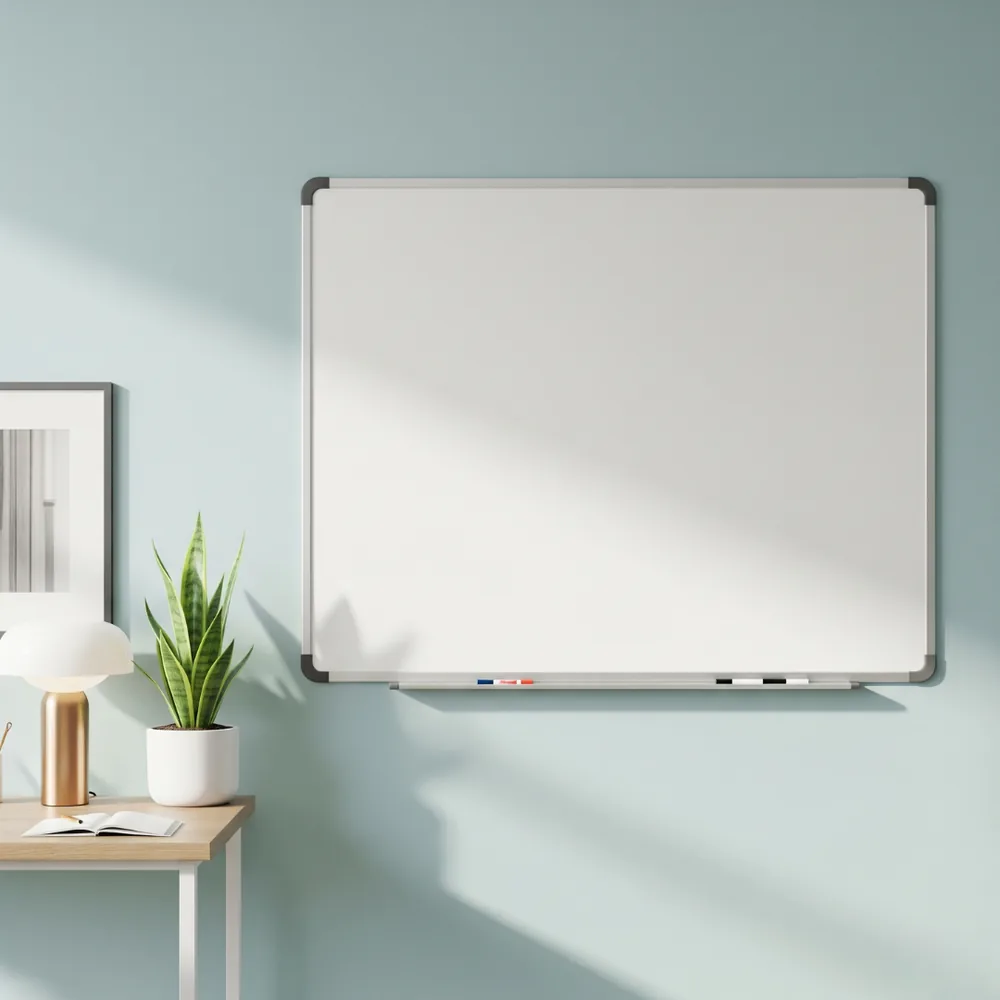
What Is a Ceramic Whiteboard? Porcelain Steel, Explained Simply
Schools keep hearing "ceramic board" from suppliers. What is it actually made of, why does it last ten years, and when is it worth the price?
What the surface really is
A ceramic whiteboard is not a board made of ceramic tiles. It is a steel sheet coated with a porcelain enamel — a glass-like layer fused to the steel in a furnace at over 700°C. The result is a surface that is glass-hard on the outside and steel-tough underneath.
Because the writing layer is essentially glass, nothing penetrates it. Marker ink, chalk, grease and dust sit on top and wipe away. There are no pores for pigment to settle into — which is why ceramic boards do not ghost.
Why schools call it the "buy once" board
A normal resin board wears visibly in one to three years of daily writing: scratches, dull patches, ghost shadows. A ceramic surface is scratch-resistant enough to survive keys and compass points, and its writing feel barely changes after a decade. Manufacturers worldwide rate these surfaces for 10–25 years.
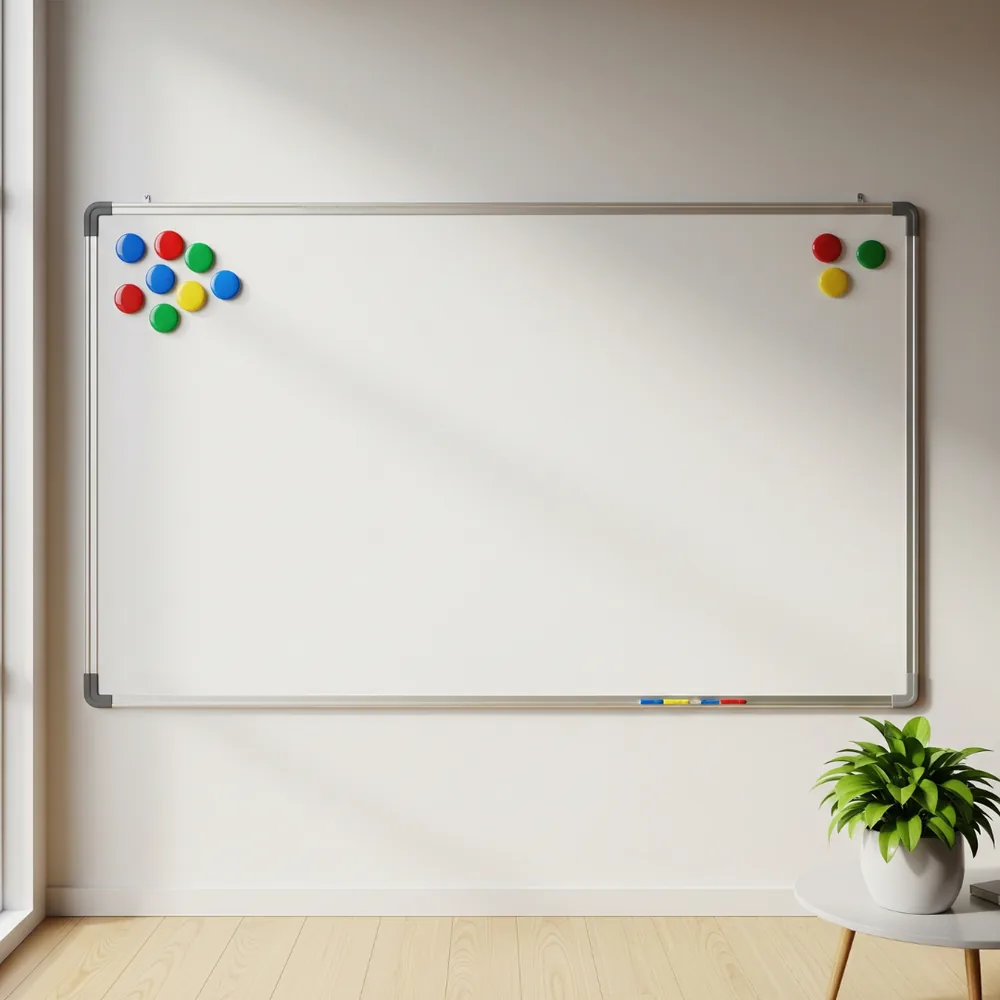
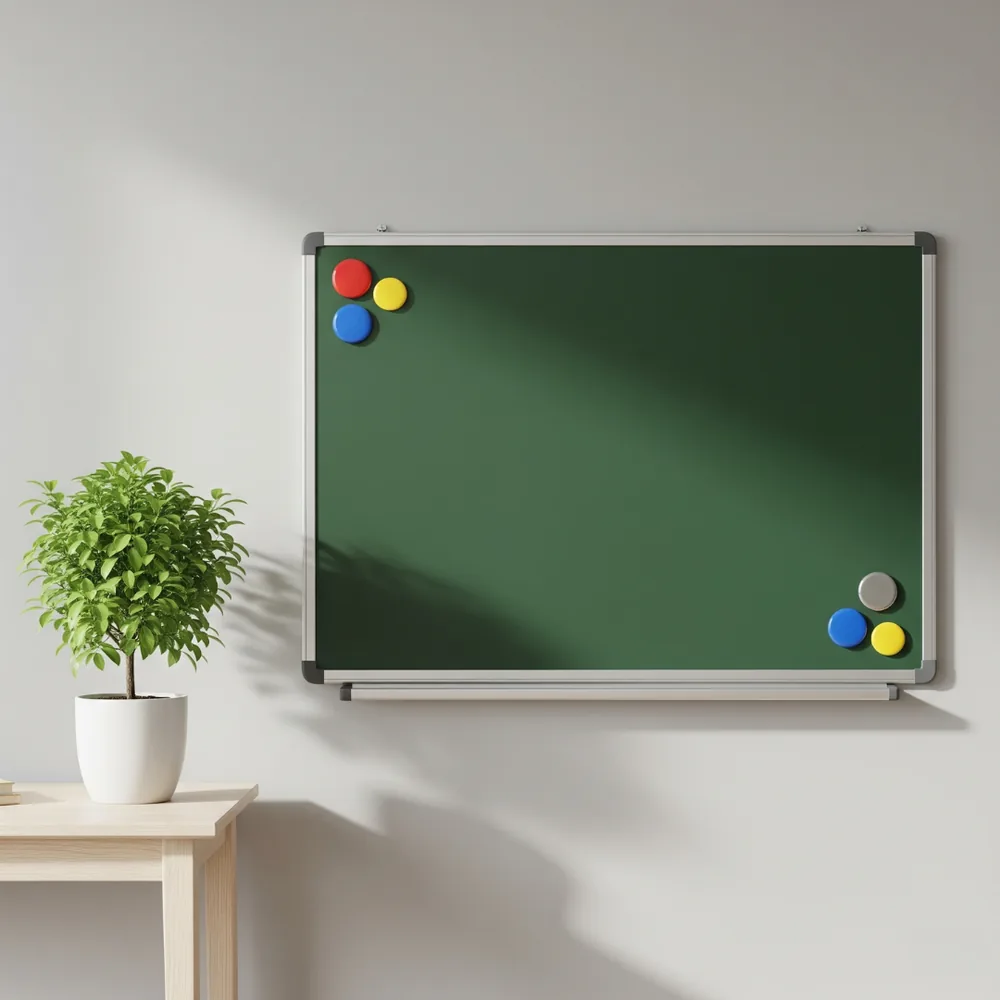
Ceramic boards are also naturally magnetic — the steel core sees to that — so one surface handles writing and chart display.
When ceramic is worth it — and when it is not
Ceramic makes sense wherever the board works hard: main classrooms, lecture halls, training rooms with back-to-back daily use. Per year of service, it is often the cheapest board you can buy.
It is overkill for light use — a home tuition room or an occasionally-used meeting room will never write through an economy board’s shorter life. Spend the ceramic budget on the busy rooms and economical boards on the quiet ones.
Board questions? Ask the factory.
Sizes, prices, delivery to your district — we reply within 24 hours.