Magnetic Whiteboards: 7 Classroom Uses Beyond Writing
A magnetic board is a display system hiding in plain sight. Seven ways teachers use the steel core that non-magnetic boards simply cannot do.
Display without damage
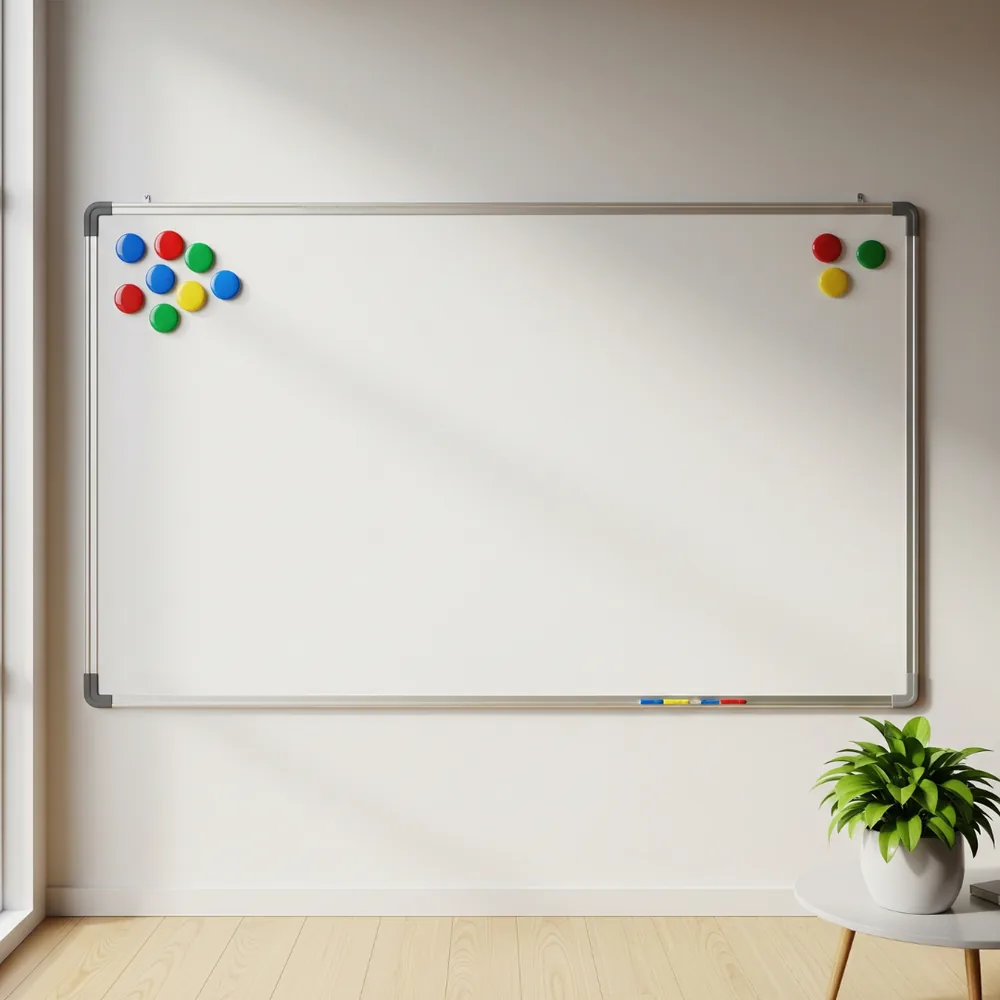
The obvious one, but worth stating: charts, maps and posters go up with magnets and come down without tape residue, pin holes or torn corners. Teachers who rotate display material weekly — timetables, birthday charts, house points — save real time and keep boards looking new.
For map work in geography and diagram display in science, magnetic board clips let a teacher hang a full-size chart in seconds, point to it beside written work, and store it just as fast.
Interactive teaching tools
Magnetic letters and numbers turn the board into a phonics and arithmetic tool for primary classes. Students physically build words and sums on the board — far more engaging than watching the teacher write them.
Magnetic flash cards work the same way for language and formula drills. A set of magnetic subject labels across the top of the board — date, topic, homework, test date — builds a daily routine students read the moment they enter.
Classroom management helpers
Magnetic name tags make group assignment visual: move a student’s magnet between house columns instead of rewriting lists. Attendance and star-student trackers on a small magnetic strip keep management on the board edge, not the teacher’s register.
A magnetic duster holder and marker tray organisers end the daily hunt for the duster. Small things, but a class of fifty notices every minute saved.
Board questions? Ask the factory.
Sizes, prices, delivery to your district — we reply within 24 hours.