5 Ways to Make Your Greenboard Last Ten Years
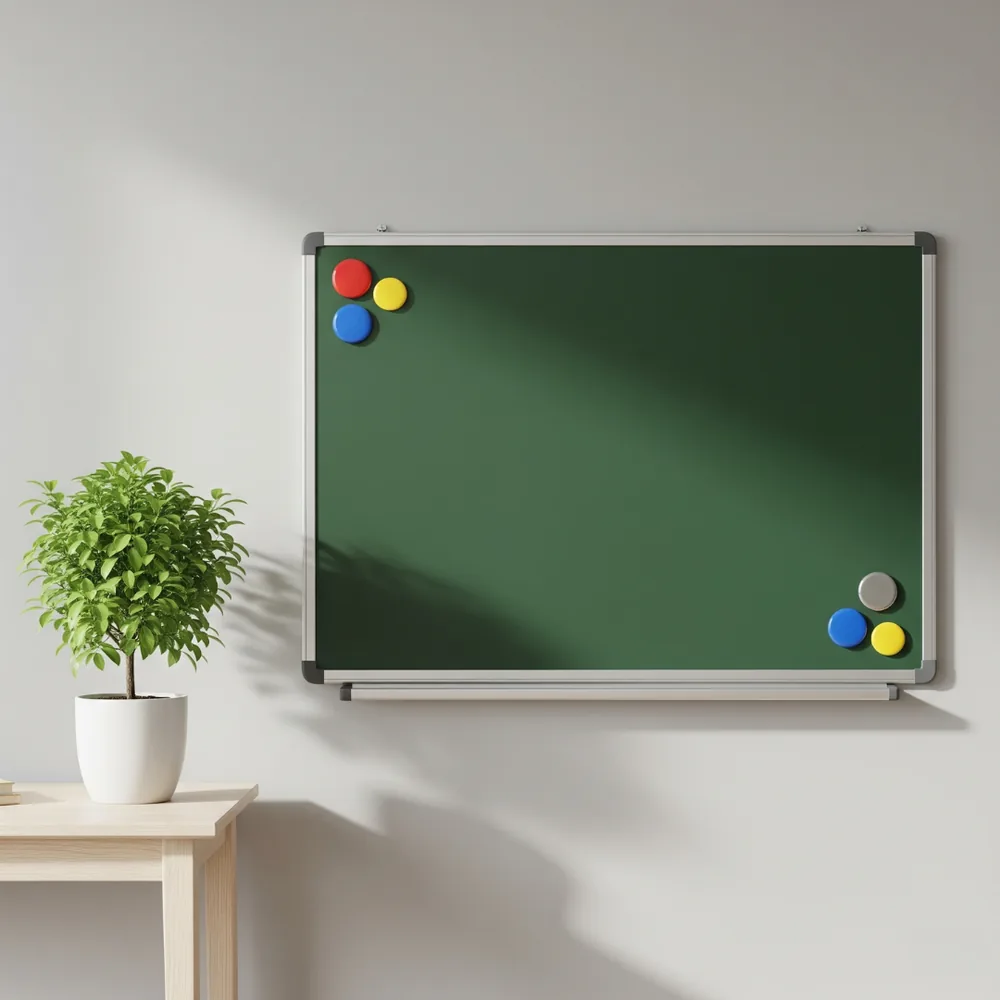
Chalk boards fail early from habit, not from age. Five low-cost habits that double — sometimes triple — a greenboard’s working life.
Erase properly, every time
Most greenboard wear starts with the duster, not the chalk. Erase with long, overlapping horizontal strokes from top to bottom — circular scrubbing grinds chalk grit into the surface like sandpaper. And bang the duster clean outside daily; a chalk-clogged duster is an abrasive pad.
Use decent chalk. Dustless or low-dust chalk costs marginally more and writes with binder instead of grit. Cheap chalk is the single biggest surface killer in school classrooms.
Wash on schedule, not on impulse
A greenboard needs a wet wash every two to four weeks: plain water, a soft sponge, and a full dry before writing again. Writing on a damp board dissolves the surface finish into a paste that dries into permanent streaks.
Never wash with soap, detergent or chemicals — they strip the matte finish that gives chalk its grip. If the board starts looking shiny or chalk starts skating, that is finish wear, and it is almost always soap damage.
Protect the frame and the tray
Chalk dust is mildly corrosive. Empty the chalk tray weekly and wipe the frame — an aluminium frame lasts decades if dust never gets the chance to cake into its corners.
Finally, teach the one-hand rule to students: boards are for writing, not leaning. Point loads dent the writing surface, and a dented board is never quite erasable again. Five habits, zero cost — that is how a greenboard reaches ten years.
Board questions? Ask the factory.
Sizes, prices, delivery to your district — we reply within 24 hours.