Chalk vs Marker: The Real Cost Per Classroom Per Year
Everyone knows markers cost more than chalk. Few schools have done the actual maths — so we did it for a real 40-week academic year.
The consumables bill
A classroom running six periods a day typically uses 2–4 whiteboard markers a week. At ₹20–35 per marker, that is ₹2,000–4,500 per classroom per year on markers alone. Add a weekly cleaning solution and the bill touches ₹5,000.
The same classroom on chalk uses roughly a box a week — ₹40–80 for a box of quality low-dust chalk. Even with daily duster replacements, the annual bill stays around ₹2,000–3,000. Chalk is cheaper, but not by the ten-to-one margin most people assume.
The costs nobody puts in the spreadsheet
Markers dry out mid-lesson — every teacher has shaken a dying marker while fifty students wait. Chalk never does that. On the other hand, chalk dust settles on desks, books and electronics, and in computer-adjacent rooms that dust has a real cost.
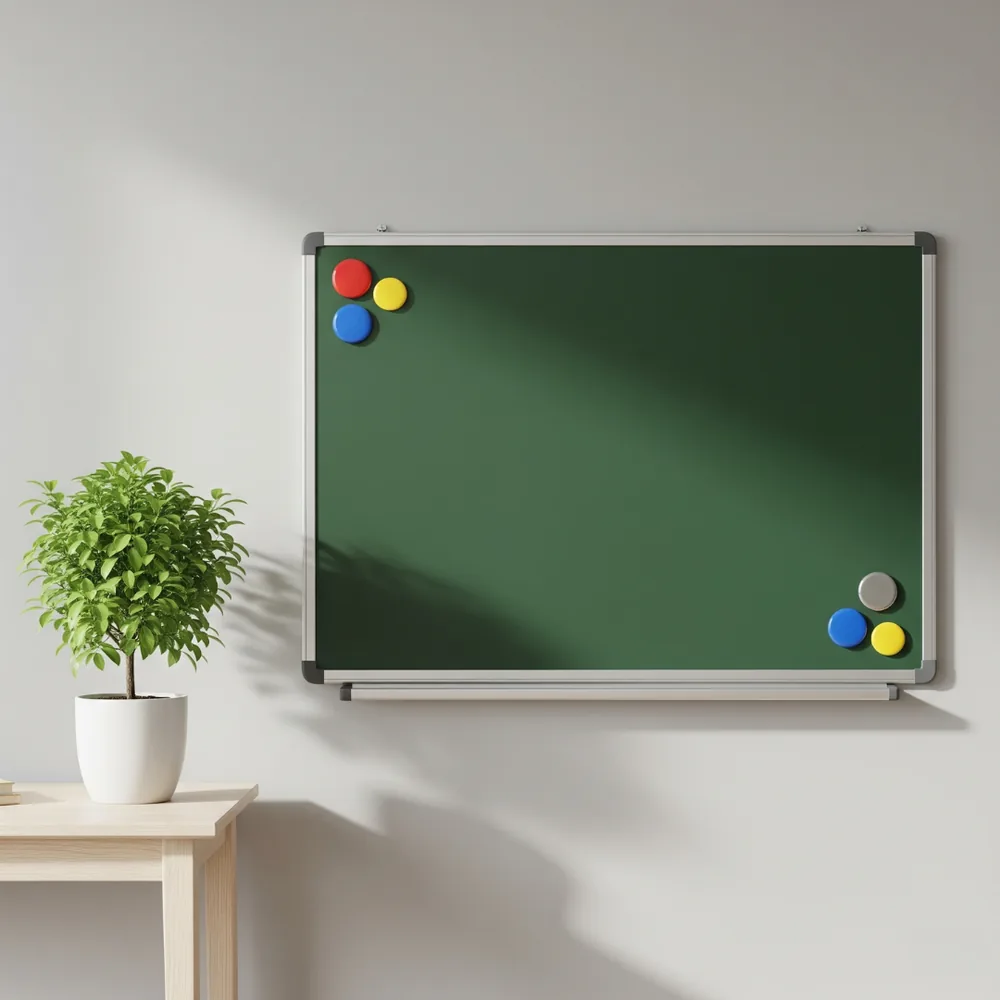
There is also the surface cost: chalk is gentler on boards than dried marker ink, so greenboards in the same quality tier often outlast their whiteboard twins by a year or two under identical timetables.
The practical answer
For heavy daily teaching in regular classrooms, chalk boards win on cost and reliability. For smart classes, coaching centres and rooms with electronics, marker boards win on cleanliness. Many schools run both — which is exactly why combo boards exist.
If your school is re-boarding, do the maths per room, not per school. The right answer usually differs between the smart class and Class VIII-B.
Board questions? Ask the factory.
Sizes, prices, delivery to your district — we reply within 24 hours.